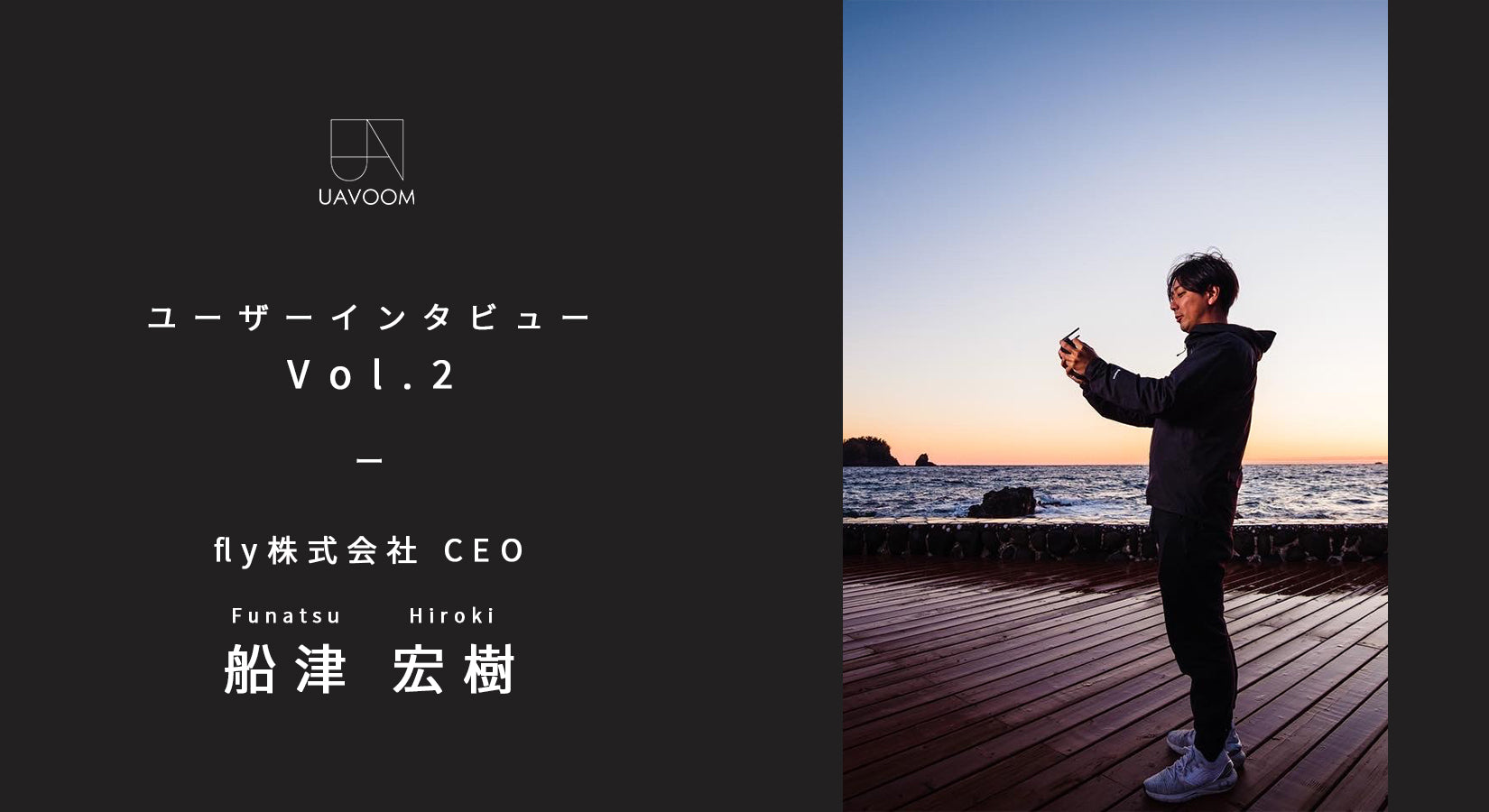
User Interview - Vol.2
Hiroki Funatsu, CEO of fly Inc.
This series is an interview project that brings you the real voices of creators and business owners who use drone cameras.
In the second episode, we interviewed Hiroki Funatsu, CEO of fly Inc., about the background to his decision to use drones for business, their benefits, and the equipment he uses.
■First, please give us a brief introduction about yourself.
Nice to meet you, my name is Funatsu from fly Inc.
To talk about my background, I joined V-cube Inc., a company that develops and sells web conferencing systems, as a new graduate in 2009. Five years later, I became the Osaka Sales Office Manager and responsible for the Kansai, Chugoku and Shikoku regions.
At the time, I was wondering if there was anything that could be used as a device to connect to V-cube's web conferencing app, so I tried out various combinations, such as wearable devices and remotely controlled robots, and one of them was a drone. That was my first encounter with drones.
After that, we thought that combining drones with a web conferencing app could be used for disaster prevention and remote visual inspections, so we launched V-cube Robotics Japan (now Sensin Robotics Inc.), a spin-off from V-cube, as a company that makes software specifically for drones. I joined the company as its sales director, and developed a service that, in addition to selling drones, allows drone video transmissions to be viewed in real time at multiple remote locations.
However, we realized that drones could not be used for industrial purposes unless they could not only watch images, but also fly automatically, collect data, and even analyze it.As a result, we gradually focused on developing software for automatic navigation and data management, and this is how we came to be known as Sensyn Robotics today.
Drones have recently started to be used for industrial purposes, but I personally want to do something to make the drone industry itself bigger.
The reason is that the domestic drone industry is filled with many older people and talented people, but conversely, I feel like there are not many younger generations. This means that it is an industry where it is difficult to take on new challenges and where it is difficult for new people to enter. For this reason, I wanted to focus more on entertainment and education in order to get young people interested, so I founded fly Inc. in December 2020.
We undertake a variety of tasks, including industrial, aerial photography, education, and consulting.
This is what I ended up doing by doing things that seemed fun. People around me often ask me if it's a hobby or a job (laughs).
■Please tell us what made you start using drones.
I've always liked new things, so when I was at V-cube, I was thinking about how to hold web conferences on tablets and tried out various things. However, around 2015, web conferences started to be used more and more between the site and the conference room, rather than just connecting "conference rooms." So, as I mentioned earlier, that's when I started to look at wearable cameras and drones.
At the time, drones were simply flying drones with a GoPro camera mounted on them, so I wondered how I could pull drone footage into our web conferencing app. At that time, DJI released the Inspire 1. The transmitter had an HDMI output terminal, so I thought maybe I could stream the Inspire 1's footage from the HDMI port to a remote location through a web conferencing app, and that's what got me started on trying out drones.
What kind of work do you use drones for?
Fly Inc. is an aerial photography production company that handles aerial photography and video production, and also provides education that combines drones, video editing, and programming. For example, we offer short-term extracurricular classes at private junior and senior high schools where students can learn the programs we create.
In terms of the work breakdown, it's about 40% aerial photography, 30% consulting, and 30% education.
Recently, we held a three-day, two-night school in Ureshino Onsen, Saga, for parents and children to learn programming, video editing, and drones. In the evening, we held a mini drone show, flying nine illuminated Robomaster TTs (*1) in time with music, which was very well received by the participants.
I hope that we can increase opportunities for children to experience drones in this way.
*1...An educational drone developed by DJI Education that can be used to learn programming and other skills.
■How has the use of drones improved those operations?
In terms of the industrial side, the biggest advantage is that we have been able to reduce the time dramatically. Recently, the performance of the drones has improved, and the transmission distance has increased, so we can now take pictures at twice the speed of before, which I feel has made things extremely efficient.

■What drone do you mainly use?
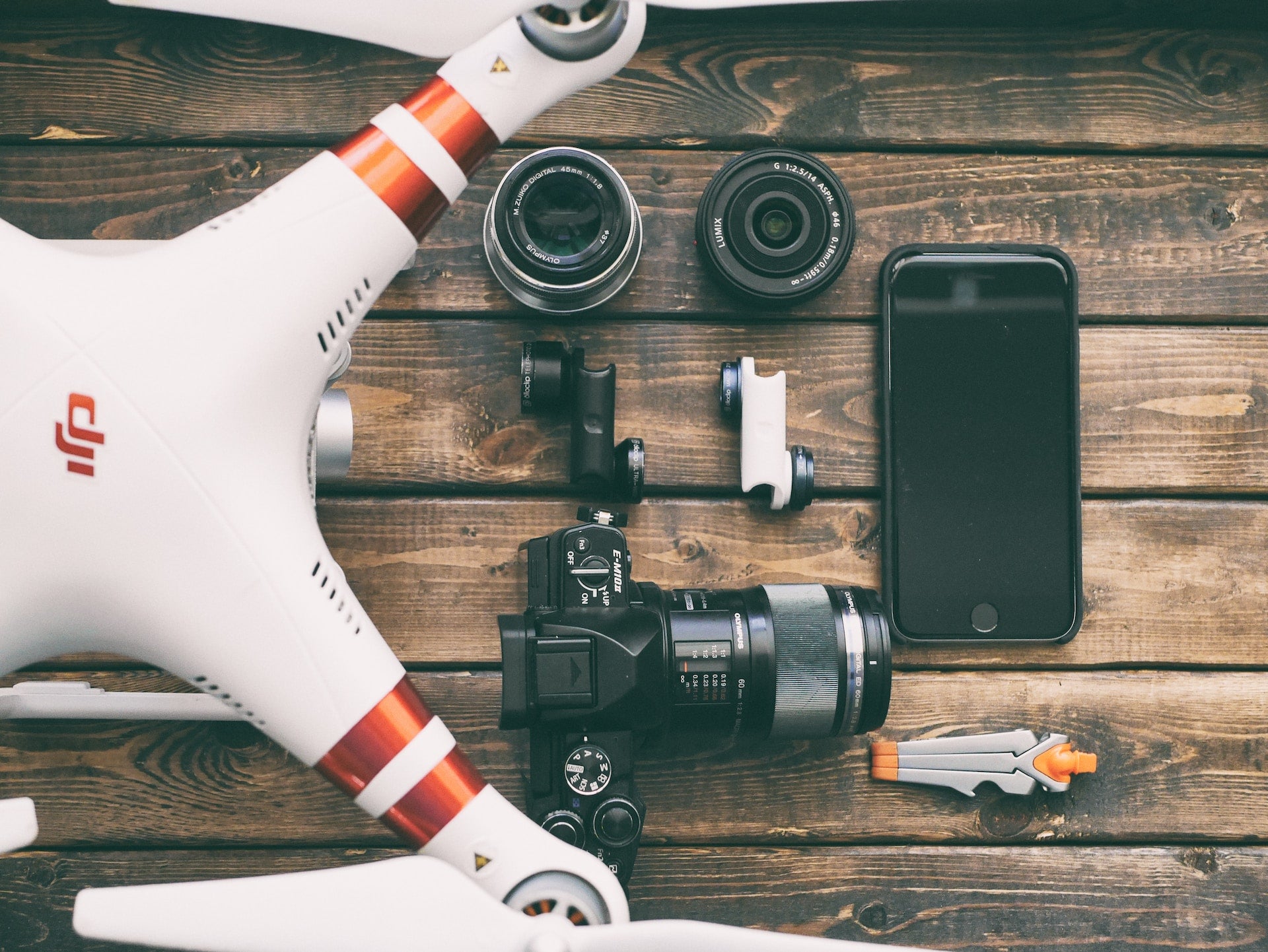
For aerial photography, I mainly use DJI's Inspire 2 and Mavic 3.
I recently purchased the Sony Airpeak S1, and I'm looking forward to using it more and more. I haven't used it for business purposes yet, but I plan to use it soon, so I'm looking forward to it. The Airpeak S1 can be equipped with an α (Alpha) (*2), which is attractive for people who do video production or live shooting.
*2...Sony's SLR/mirrorless camera brand. They offer the full-size α7 series and the latest α1 series, and have fans all over the world.
For education, we use programming drones such as the DJI Mini 2, Tello EDU, and RoboMaster TT, and for inspections, we use the Matrice 300 RTK, as we often inspect steel towers and factories.
In addition to my other industrial endeavors, I also help out at VFR Inc. (※3) and am involved in entertainment-related businesses, such as delivering surprise rings to cottages using a Wingcopter (※4) (laughs).
*3...A subsidiary of VAIO Corporation specializing in the drone business, including drone manufacturing, sales, and software development.
*4: A German-based manufacturer of drone hardware and solutions. Known for its fixed-wing VTOL for logistics, which uses a unique tilt rotor mechanism and patented technology.
■Please tell us why you use the above and what you like about it.
I think the great thing about the Mavic 3 is its long video transmission distance.
For example, when I was using the Mavic 2 to photograph pylons, I often found that the signal was cut off when the pylons were too far apart. There are a lot of forests, and the trees often cast shadows that cut off the signal.
However, with the Mavic 3, even when shooting from three or four buildings away - about 800 meters in distance - there was absolutely no disruption to the video transmission, which I thought was impressive.
Since I can shoot more efficiently, I can now take about twice as many photos as before.
■Are there any peripherals you use regularly? If so, what are your recommendations or favorites?
I will definitely bring a monitor and wireless video transmission equipment.
Also, an iPad (11 inches) is a necessity. I digitize all flight plans and proposals and store them on my iPad. I recommend going paperless because it reduces the amount of stuff you have to carry.
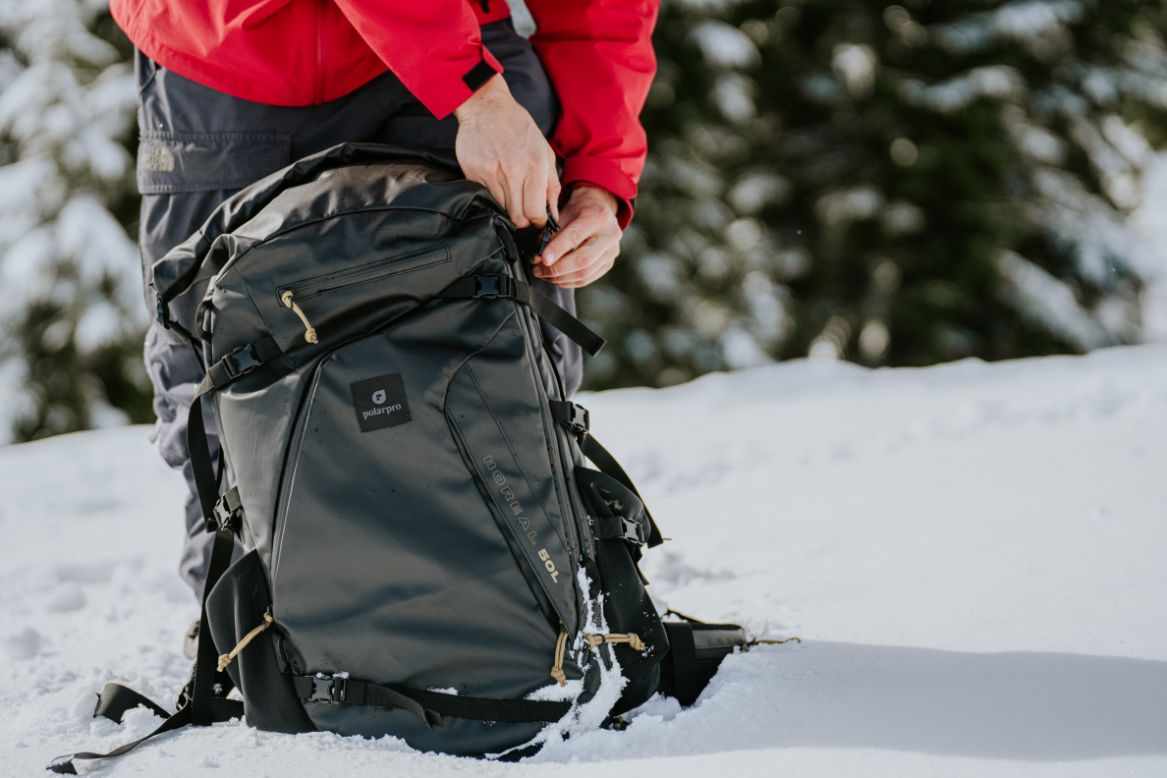
Although it's not a piece of equipment, I also love to carry a shoulder bag and always take it with me to the site. I also carry a lot of things with me on site, so I put all the small things like batteries and SD cards in it to make sure I don't lose or forget anything.
Monitor (Blackmagic HP): https://www.blackmagicdesign.com/jp/products#video-audio-monitoring
Wireless video transmission device (Hollyland HP): https://www.hollyland-tech.com/detail-mars400spro
■What are your expectations for future drones and peripheral devices?
One thing I think would be nice to have is sunglasses that work in tandem with wearable technology, because when you're on set, you have to wear sunglasses, an intercom, and a lot of other things.
When I put on those sunglasses or goggles, I want to be able to communicate directly with various people like with an intercom, and be able to check the footage I've taken by projecting it directly onto the lens, all at once. (laughs)

Hiroki Funatsu, CEO of fly Inc.
After graduating from university, he worked for systems and drone companies, before founding fly Inc., a drone aerial photography production company, in 2020. He is active at the forefront of the industry, working in video production, industrial work, education, consulting, and more. In particular, he supports the entry of a new generation of drone users, aiming to further the development of the drone industry.
Fly Inc. Website: https://teamfly.jp/
Youtube: https://www.youtube.com/c/HirokiFunatsu/featured