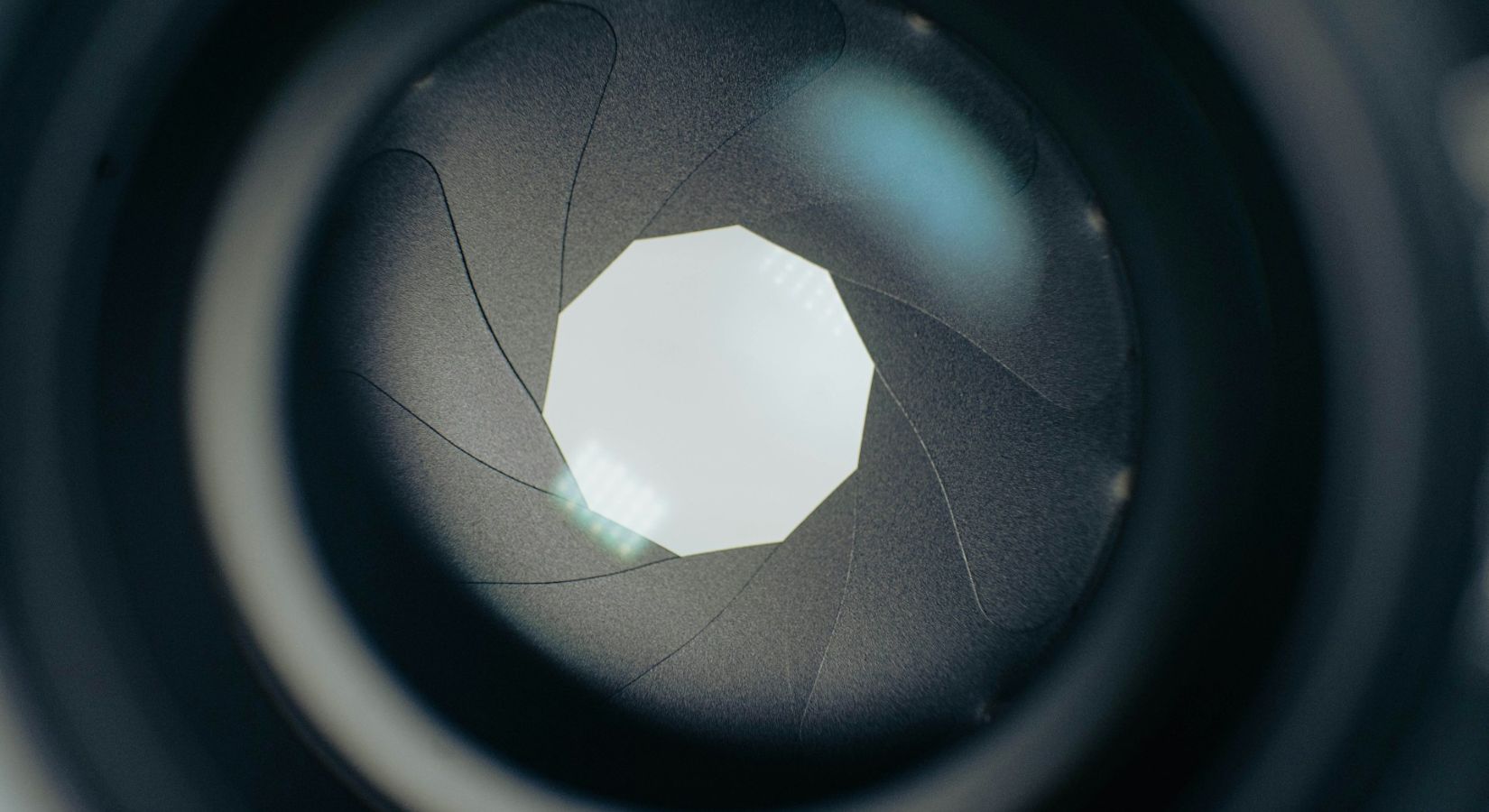
The f-number on a camera is a numerical representation of the lens aperture, and plays an important role in photography. By adjusting the f-number, you can control the amount of blur and depth of field in your photo, adding depth to your photograph's expressive power.
This page will explore the basic concept of f-stop, its effects, and the best settings for different scenes.
What is a camera's f-number?

The f-number is a measure of the lens aperture; the larger the number, the less light enters the lens.
The smaller the number, the wider the aperture, allowing more light to reach the sensor, allowing you to take brighter photos even in dark scenes.
Conversely, a larger f-number closes the aperture, reducing the amount of light, but also allowing more of the background to be in focus.
Photographers use this property to manipulate the relationship between subject and background and to adjust for lighting conditions.
Depth of field: what you need to understand to master f-stops

Depth of field (DOF) refers to the range of what is in focus.
If the f-number is small, the depth of field will be shallower and the area in focus will be narrower, making the subject stand out and the background blurred.
On the other hand, increasing the f-number increases the depth of field, allowing you to take sharper photos with everything from the foreground to the background in focus.
In landscape and architectural photography, a relatively high f-stop is typically used to capture the entire scene clearly.
How f-stop settings affect shutter speed and ISO
The f-stop setting is closely related to the shutter speed and ISO sensitivity.
Opening the aperture to a low f-stop allows more light to reach the sensor, allowing you to shoot at a relatively fast shutter speed even in dark places.
However, if you close the aperture by increasing the f-stop, you will need to either slow down the shutter speed or increase the ISO sensitivity to maintain the same brightness.
The f-stop controls the "bokeh" effect, a factor that greatly influences the impression of a photograph, so it is common to set it before shutter speed or ISO sensitivity.
It is essential to have a final image of the photo or video you want to take, and adjust the f-stop, shutter speed, and ISO sensitivity to achieve the correct exposure so that you can capture the image you intend.
The maximum aperture also affects the price of the lens

A lens's "maximum aperture" refers to its lowest f-number, and has a significant impact on the price of the lens.
The brightness and bokeh characteristics that a lens provides at its maximum aperture are important factors for professional and amateur photographers, and generally the smaller the aperture, the more expensive the lens.
A fast lens with a low maximum aperture is particularly useful for portraiture and low-light photography, as it allows for faster shutter speeds in low light conditions and performs well when creating artistic bokeh.
Shooting situations where you should set a small f-stop

The blur effect achieved by setting a small f-number is effective when you want to make the subject stand out, such as when photographing portraits, night scenes, or starry skies.
In particular, in scenes where you want to focus on a single point, such as a person's face or an animal's eyes, you can take advantage of the shallow depth of field provided by a small f-number to make the subject stand out from the background.
Also, when shooting in dark scenes, a small f-number is recommended to capture more light.
Shooting situations where you should use a larger f-stop setting

When photographing landscapes or architecture, where you want to capture a wide range in focus, it is common to set a large f-number.
The greater depth of field allows for sharper detail from the foreground to the background.
Additionally, in situations where you want to keep multiple subjects at different distances in focus evenly, such as group photos or product photography, a large depth of field achieved by a high f-stop is required.
A large f-number is also useful for taking sharp, clear photos in places with abundant light, such as outdoors or in a well-lit studio, and has the advantage that you don't necessarily need an expensive lens with a low maximum f-number.